
You can sell a Tennessee house with plumbing problems, but the condition, disclosure requirements and contract still matter. A leaking fixture does not tell you whether the whole system needs replacing. A cash offer does not make a sewer defect, title problem or safety concern disappear. Start with what you actually know, get the right professional input, and compare the cost of three paths: repair and list, list as-is, or accept a direct as-is offer.
For a Knoxville or Knox County seller, I would organize the decision around one practical question: what information would let you compare written offers without guessing about the plumbing? This guide helps build that file. It is seller education, not a plumbing diagnosis, legal opinion or promise that a particular property can close.

Start with these four checks
- Separate your observations from a contractor's diagnosis. Keep both in writing.
- Confirm the applicable disclosure, disclaimer or exemption before accepting a contract.
- Distinguish indoor plumbing, the sewer connection and a private septic system; they can require different records and professionals.
- Compare net proceeds and contract risk, not just the offered price or an advertised closing date.
What must a Tennessee seller disclose?
The source article links to the Tennessee Residential Property Disclosure Act. That link is a 1998 public chapter containing disclosure-form language, not a complete current statement of every seller's obligations. Under T.C.A. § 66-5-202, covered transfers generally require a condition disclosure addressing known material defects. The statute also permits a disclaimer when the purchaser waives the required disclosure. It does not require the owner to commission an independent inspection just to complete the disclosure.
Section 66-5-203 calls for delivery before acceptance of the purchase contract; acceptance means full execution by all parties. Do not leave the paperwork until closing. Section 66-5-209 lists exempt transfers. Have a Tennessee real-estate attorney or qualified professional check which route applies, especially for an inherited property, trust or property you have not occupied. An exemption or an as-is clause is not permission to mislead a buyer.
A useful condition note separates fact from inference: “Water appeared beneath the kitchen sink twice in September; a plumber replaced the trap on September 20; the invoice is attached.” That is a hypothetical documentation example, not a company transaction. Avoid “the plumbing is perfect” when all you have is a receipt for one repair.
- Record known leaks, backups, repeated clogs, water stains and prior repairs.
- Keep invoices, inspection findings, permits, insurance correspondence and any warranty terms.
- Identify unresolved questions instead of converting them into an unsupported diagnosis.
- Ask your adviser how to handle later changes or new findings before closing.
Documentation helps explain the condition; it does not guarantee immunity from a claim. Never promise that a signed disclosure prevents every dispute.
Which inspection or records do you need?
Begin by identifying the system involved. A wet vanity, slow drain, damaged private sewer lateral and septic alarm are not interchangeable problems. Tell a qualified plumber exactly what you observed and ask what their proposed inspection covers. A general home inspection may identify symptoms without determining the condition of buried pipe. If a camera inspection is proposed, ask for the recording, written findings, accessible line length and any limitations.
The source's TDEC septic systems database link is a starting point, not proof that a particular property's file exists or that an installed system is sound. TDEC's septic-system permit hub provides state resources and local routing. For Knox County, confirm the appropriate local environmental-health process rather than assuming every county uses the same state workflow.
TDEC describes an Inspection Letter as documentation of an existing septic system's status. Ask the issuing office what records, site work, fees and limitations apply. A records search, inspection letter, pumping receipt and detailed system assessment answer different questions. No missing record automatically proves failure, and no letter guarantees future performance. There is no universal one-week time saving.
If the property uses public sewer, ask the utility or relevant authority about service records and responsibility for the affected line. Do not assume the utility will pay for work on private property. Before approving excavation, get a written scope covering access, permits, restoration, exclusions and responsibility for surprises.
Active sewage, flooding, unstable areas or water near electrical equipment call for appropriate professional help before ordinary sale planning. Do not enter a hazardous crawl space to obtain photographs for an offer.
Repair first or sell as-is?
There is no reliable dollar threshold at which every seller should repair. A small fixture repair may be practical, while a buried-line project can have uncertain access and restoration costs. Neither guarantees a particular increase in sale price. Obtain a property-specific bid and compare it with realistic as-is and repaired sale estimates.
- Repair, then list: consider contractor availability, permit and inspection steps, payment timing, cleanup and a contingency for hidden damage.
- List as-is: you can seek broad exposure without first completing repairs, but access, inspections, buyer financing and negotiated credits may still matter.
- Direct cash offer: a buyer may accept the present condition, usually pricing in repair uncertainty and risk. Review the contract rather than assuming cash removes every contingency.
The provider-supplied net proceeds comparison is an outside commercial resource, not official Tennessee guidance or an endorsement. Use your own estimates when comparing repair costs, transaction charges, carrying expenses and potential concessions. It was supplied with the publishing partner's article; its link wording and attributes are retained.
The original FHA/HUD property acceptability standards link is an archived 2025 handbook. Consult HUD's current handbook page and the buyer's lender for current requirements. A condition issue can affect financing, but “all financed buyers are impossible” is too broad. HUD's 203(k) rehabilitation program includes eligible plumbing work, subject to lender and program requirements. A financing option is not an approval for this buyer or property.
Put each route on the same worksheet. A higher headline price may leave less after repairs and carrying costs; a lower direct offer may still leave less than an as-is listing. Use actual written terms and a realistic fallback if a buyer cancels. Our Knoxville cash-sale versus listing comparison explains the broader tradeoffs.
What does an as-is cash contract actually change?
An as-is arrangement can shift repair responsibility to the buyer under the agreed contract. It does not automatically eliminate inspections, cancellation rights, renegotiation, title review or required disclosures. If avoiding repairs is essential to you, have that reflected in the written agreement and ask what happens if the buyer discovers a larger problem.
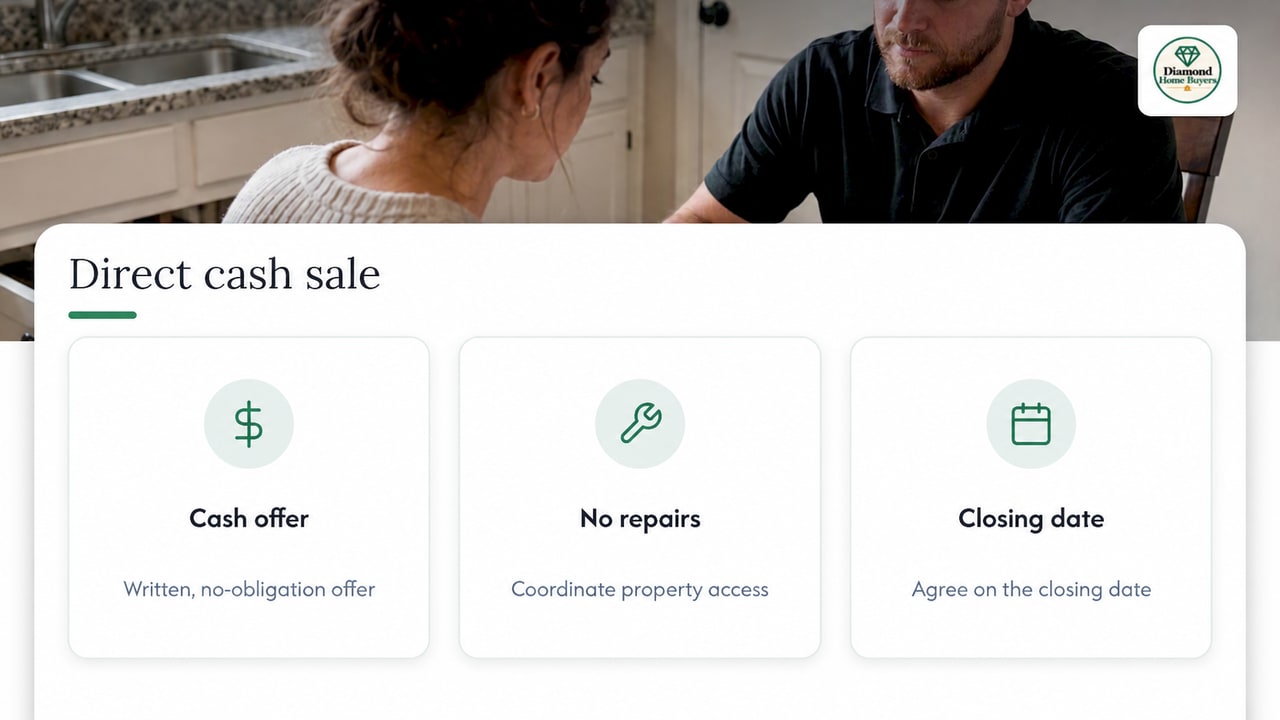
Before signing, request the buyer's legal identity, purchase price, earnest-money terms, proof of funds, due-diligence period, assignment provisions and proposed closing date. Clarify who needs access and for what purpose. A direct sale can avoid an open-market showing campaign without eliminating all property visits.
Read the cost allocation as carefully as the price. There may be taxes, mortgage or lien payoffs, title charges and other settlement items. A no-commission direct purchase is not a promise that the seller owes no money at closing. Ask the closing professional for an estimated settlement statement and review any existing agent agreement.
Use the cash-buyer terms checklist to compare buyers on the same questions. A proposed closing date is a date to agree upon and work toward, not a guarantee that title, funds, access and required signatures will be ready.
A practical plumbing-sale checklist
- Address immediate safety concerns. Arrange suitable professional help for active hazards; sale paperwork is not a substitute for making an unsafe situation safe.
- Write the observation record. Include dates, location of symptoms, prior work and anything a professional actually reported.
- Gather the existing file. Collect permits, receipts, inspection reports, utility information and septic records where relevant. Keep a written missing-record response too.
- Define the question before paying for a test. Ask whether the concern is a fixture, supply line, drain, sewer lateral or private septic component, and what the inspection will and will not establish.
- Review disclosure requirements early. Resolve the appropriate form, waiver or exemption with qualified help before accepting a contract.
- Compare scopes and offers. Separate repair, access, excavation, restoration, permits and unknowns. Use consistent assumptions across the three selling routes.
- Read the contract and settlement estimate. Check inspection rights, deposits, assignment, costs, payoffs, access and required approvals—not just the as-is label.
- Keep the file current through closing. Share new material findings as advised, confirm completion of agreed steps and retain the final paperwork.
A contractor's estimate is not an appraisal. A buyer's repair allowance is not necessarily the amount you would spend hiring your own contractor. Ask how a large allowance affects the offer and compare another written option before committing.
When can the as-is route make sense?
Someone managing an inherited house from out of town may prefer not to coordinate a major plumbing project. A landlord may have concerns about access and disruption to occupants. Another seller may simply lack cash for work before selling. Those are possible situations, not stories about specific Diamond Home Buyers customers.
Convenience has a tradeoff. A buyer taking repair risk may offer less than a successful repaired listing would produce. If time and funds allow, it is reasonable to obtain both a listing assessment and a direct offer. If there is a foreclosure or other legal deadline, obtain timely professional advice; requesting an offer does not pause that deadline.
For a broader repair list, the Knoxville house-needs-work guide helps organize multiple issues without assuming they all need fixing before sale.
Request an as-is offer without guessing about repairs
Diamond Home Buyers considers as-is purchases in Knoxville and surrounding East Tennessee. Tell us the location, known plumbing condition, occupancy and preferred timing. A review may include questions, records and arranged access before written terms can be offered. We do not promise to buy every property or close on any date a seller selects.
You can request a cash offer without committing to sell. Share available reports instead of ordering extra work solely for our inquiry. We can discuss a direct purchase without requiring you to complete an agreed repair list first; the actual condition, price, access and closing terms belong in the agreement.
Our cash offer calculator now includes a seller-net comparison for different sale routes. It is an educational estimate, not an appraisal, offer or prediction. Replace assumptions with your own bids and settlement figures.
Frequently asked questions
Can you sell a house with bad plumbing in Tennessee?
A sale may be possible. Document known conditions, determine the applicable disclosure requirements, and compare repair-and-list, an as-is listing and a direct offer. The condition, buyer financing and contract terms affect the available options.
Do all Tennessee sellers use the same plumbing disclosure form?
No. Covered transfers generally require a condition disclosure, but a purchaser-waived disclaimer or a statutory exemption may apply. Have a qualified professional confirm the correct route. An as-is label is not permission to conceal known facts.
Does a cash buyer waive inspections or accept any closing date?
Not automatically. Access, inspection and cancellation rights, repair responsibility and the closing date depend on the written agreement. Cash does not remove title, signature or other closing requirements.
Should I rely on a 135 rule for a plumbing sale?
Do not use an unexplained number as a disclosure, repair-budget or sale rule. Ask whoever used the term for its source and meaning. Base this transaction on the applicable Tennessee requirements, qualified findings and written contract instead.
Who determines whether a sewage problem makes a home unsafe to occupy?
Contact the appropriate local code or environmental-health authority and a qualified professional about the actual condition. A seller or cash buyer cannot substitute a marketing label for an official determination. Avoid unsafe areas while arranging help.
Sources and limits
This guide uses the current statute sections, TDEC services and HUD resources linked in context above. The following original references are retained for transparency; archived law and handbook documents should not be treated as the entire current rulebook.
- CHAPTER NO. 727 (Tennessee Residential Property Condition Disclosure) — historical 1998 public chapter.
- TDEC septic systems / records search — state portal; verify the correct local records process.
- FHA Single Family Housing Policy Handbook (HUD) — archived 2025 version; consult the current HUD handbook and lender.
Property facts, contract terms and laws can change. Use a qualified plumber for diagnosis and a Tennessee attorney or other appropriate professional for your specific disclosure and contract questions.